
AI runtime governance—not model capability—is the next critical gate for production deployments. Here’s why.
In any application development lifecycle, demos and prototypes rarely reveal the challenges ahead. With curated data in a carefully controlled environment, everything works as intended. But moving a demo to production is where the complexity surfaces. Integration, latency, observability, and audit requirements may not surface in a demo, but in a production environment, workflows without governance become nothing more than failed pilots.
Once the operational hurdles are cleared, a second gate appears: economic governance. Production costs often exceed budget by a multiple, and the source of the overruns can be hard to trace. Did the workflow run as designed? Which models were invoked? Was the estimate wrong? Was the workflow designed inefficiently? The same control gap that stalled the project resurfaces on a different axis. Operationalization isn’t a step that precedes governance—operationalization is governance.
The first explanation usually offered is “AI is just too expensive.” But the sequence tells a different story:
- The demo works
- Production introduces operational complexity
- The team solves for reliability and scale
- Then the bill arrives
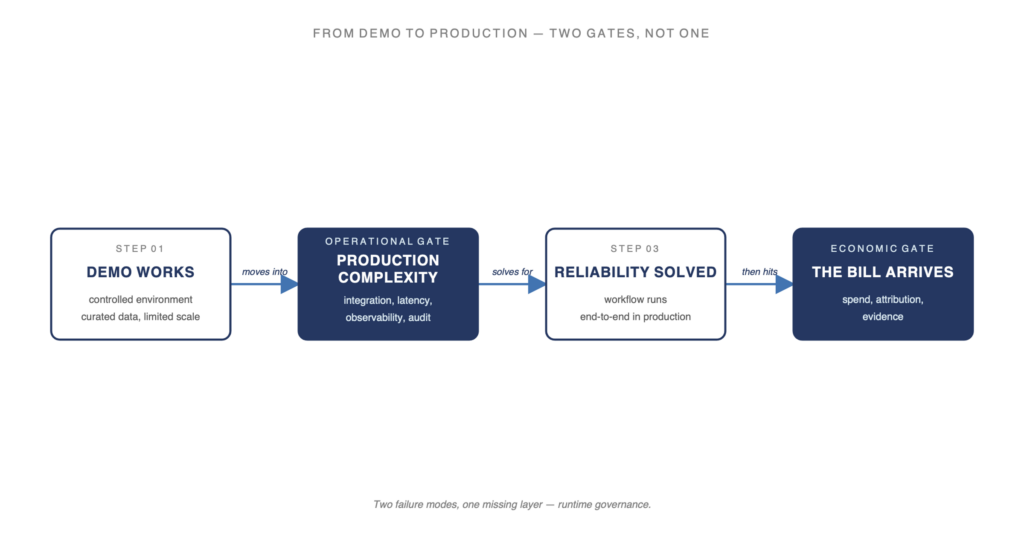
Figure 1: The two gates—operational and economic
Projects don’t usually stall because the AI technology doesn’t work. They stall because of a governance gap: the business hasn’t properly governed the technology—first operationally, then economically. The real hurdle for production deployments isn’t model capability. It’s runtime governance that clearly identifies who can do what, what the maximum permissible cost is, and what evidence gets captured during execution. These operational and economic controls must be enforced continuously from the start—not reconstructed after the workflow runs.
Meeting that bar requires an execution layer that applies approved spending limits, policy controls, and audit trails on top of variable AI behavior—and demonstrates, continuously, whether that spend delivers the promised value.
Think of it as the layer between the AI runtime and the existing budget and approval process: the mechanism that ensures a workflow doesn’t exceed its approved scope and that every dollar spent is traceable to a decision, a model, and an outcome.
Enterprises developing a runtime governance strategy require approved budgets, enforceable rules, and execution-time evidence. Every workflow run should be measured continuously against all three.
Figure 2 illustrates the convergence point—a runtime layer where cost, policy, and value resolve together in real time. This layer becomes essential once software can expand its own scope during execution.
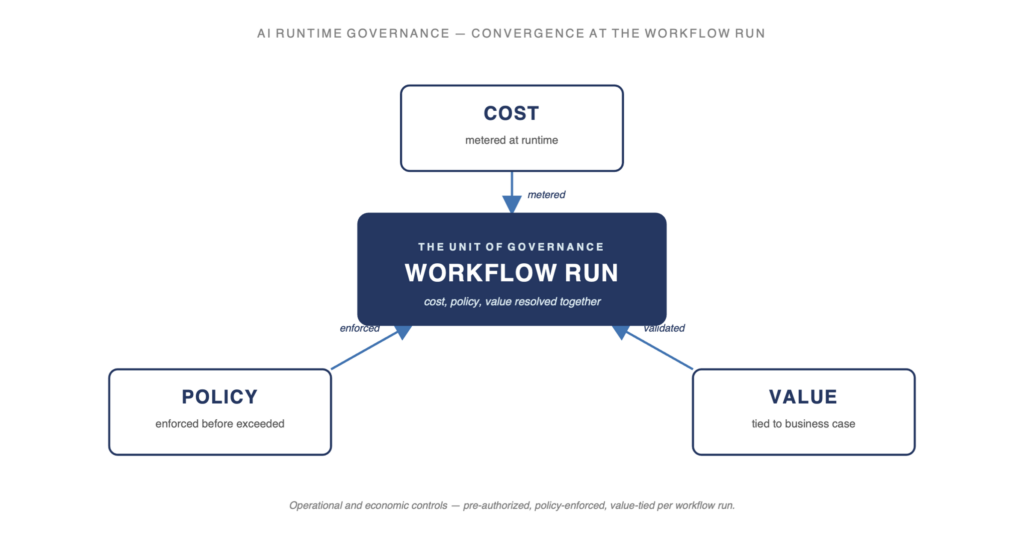
Figure 2: AI runtime governance convergence
Agentic AI broke the “predictable SaaS” assumption
Enterprise SaaS is easy to budget for. It’s licensed by the seat or tier and bounded by contract. Even usage-based SaaS is typically metered in stable units with guardrails.
Enterprise SaaS can be highly configurable, but it’s still bounded. Admins choose from a finite set of roles, rules, fields, and workflow toggles, and the execution paths remain largely predesigned and repeatable across customers. Even “loops” like automations, retries, and batch jobs run within vendor-defined
guardrails—deterministic steps on metered infrastructure. Truly custom behavior comes from constrained configuration or paid integrations.
Agentic AI breaks that assumption. Inference costs are variable because the work itself can expand at runtime: model choice, tool calls, retries, and task decomposition can all change mid-run. Execution paths—and
costs—vary by default. Cost becomes a behavioral output, not a static input.
Contracts can define price per token, per workflow, per outcome, or per credit bundle. But pricing alone won’t stop a workflow from exceeding its budget mid-run, prevent runaway loops, or produce audit-grade evidence. Variability isn’t the issue—unmanaged variability is. And no enterprise accepts unmanaged risk in a production environment.
AI software pricing requirements
In the agentic AI era, enterprise buyers require the following attributes before any new AI system touches a live workflow:
- Budget approval. Finance needs clear spend guardrails. “Pay for what you use, reconcile later” doesn’t match how capital is allocated.
- Cost attribution. Enterprises span business units, departments, and cost centers. Shared AI infrastructure needs a defensible cost-allocation model.
- Enforceable policy controls. Risk teams don’t want retrospective dashboards. They need preventive controls that define which tools and systems can be used, which data can be accessed, and under what conditions.
- Execution-time evidence. When an agent influences a customer record, a pricing decision, a financial transaction, or a system of record, audit and compliance teams need a runtime record: the inputs used, the model and version invoked, the policy checks applied, the approvals taken, and the rationale for the output.
- Provable ROI. Renewal and expansion depend on outcomes. If the platform can’t demonstrate value against the original business case, both are at risk.
None of these requirements are unreasonable. They reflect how responsible organizations govern any significant operational expense. The problem is that most AI platforms weren’t built with these constraints as core design requirements.
Important questions for AI platform buyers
As enterprises evaluate AI platforms for production workflows, the key shift is from what the system can do to how its behavior is governed.
Disqualifying gates
If a vendor can’t answer these questions and demonstrate the answers in a live workflow, the platform isn’t a production candidate:
- How is usage metered at the workflow-run level, and what audit evidence is captured by default?
- How are spend limits enforced before they’re exceeded?
Scalability factors
These questions determine how far and how quickly scaling can happen within the governance model:
- How are policy controls (data access, tool permissions, environments, regions) enforced at runtime?
- How is cost attributed across business units, environments, and client tenants?
- How does the platform tie spend to measurable outcomes (workflow completion, time saved, loss reduction, conversion lift)?
Pricing isn’t governance
Pricing matters, but it isn’t governance. The market has tried to solve the challenge of variable, hard-to-predict AI spend with commercial design—bundles, credits, commitments, outcome-based pricing, and hybrid contracts. Pricing answers “What does it cost per unit?” Governance answers “What’s allowed to happen, and what happens when limits are exceeded?”
For a useful analogy, consider the difference between payment and control. A corporate credit card enables variable spend; reconciliation happens later. Spend-management platforms like Ramp (a fintech provider of corporate cards with real-time controls) work differently: they enforce the rules when the charge happens, code the spend automatically, and produce the records auditors need.
In enterprise AI, most pricing mechanisms resemble the corporate card. What enterprises need is the control layer: AI runtime governance.
AI governance through the lens of security and economic controls
Production deployments must clear explicit security and control hurdles. An agent isn’t a chat UI; it’s an operational actor that can read from and write to systems of record. To run an agent in production, enterprises need controls over what it can (and can’t) access, what it can change, and how its decisions are recorded, so teams can review and trust the system.
Black-box lock-in is a significant control risk. If runtime traces can only be seen, rules only enforced, and problems only fixed through a vendor’s proprietary tools and consultants, the enterprise is renting capability, not building something it owns.
A runtime governance layer makes policies explicit, testable, and enforceable. It lets enterprises prove that agents conform to the rules and resolve gaps as they appear, without relying on vendor services.
It also helps to be precise about what sits inside that control plane: budgets, policy checks, and audit trails. The execution platform underneath does the harder work—it specializes agents to each client’s context, data, operating procedures, and constraints. Get that last-mile specialization and its guardrails right, and the economic controls follow.
Frontier model providers can’t reach that last mile on their own; neither can the hyperscalers. Last-mile access depends on a direct, ongoing partnership with the client.
This is where the NTT DATA AIVista Platform sits: an enterprise-grade agent execution platform that customizes agents to the last mile, pairing that specialization with model agnosticism, an AI-native knowledge base, cost controls, and verifiable guardrails for agents. A runtime control plane is necessary—but it delivers its full value only on top of an execution platform built for the last mile.
The prediction
Enterprise data platforms went through this cycle a decade ago—capability first, then governance became non-negotiable. Enterprise AI is on the same curve, only steeper. The shift is already visible in RFPs, which now probe audit trails, model update cadence, spend controls, and execution-time evidence — well beyond demo performance.
Soon, enterprise buyers will treat AI runtime governance in production RFPs the way they treat SOC 2
today—not a feature to debate, but a gate to clear.
That’s the familiar arc from cloud security. Once risk becomes board-visible, trust turns into an evidence checklist. SOC 2 stopped being a differentiator and became table stakes. Runtime governance is next.
If a platform can’t enforce policies at runtime and capture evidence as part of execution, it isn’t a production candidate. It’s a pilot that hasn’t failed yet.
What are you seeing in your own AI procurement cycles? Is economic governance showing up in your RFPs? Or is it still a conversation that happens after the pilot stalls?
Coming next in the series—The Predictability Paradox: why the usage-based vs. subscription debate is the wrong one, and how a governed envelope resolves it.
